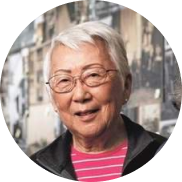
About the author
Mae Sakasegawa is a Sansei (third-generation Japanese American) with a long-standing interest in the history of the Japanese American community in Salinas, fueled by the years she and her family spent at Poston Internment Camp in Arizona during World War II.
In the late 1990s, she began compiling records for a historical chronicle to honor the stories of the Issei (first-generation Japanese American) pioneers who came to California’s Salinas Valley before her. She was tenacious in her pursuit of personal and family information and published the first volume in 2007.
This record would not exist without Mae’s tireless efforts. It’s a decades-long showcase of her dedication as a writer, editor, researcher, conversationalist, archeologist, organizer and historian.
Creating the book
Research for this project began in the early 1980s, initiated by the Salinas Valley Japanese American Seniors group. Sam Obara, Ted Ikemoto, Sid Shiratsuki and Harry Sakasegawa spearheaded a fundraising campaign to finance the gathering of the historical information and materials. Unfortunately, many of these early documents were lost.
In the late 1990s, Mickey Kubo and Mae Sakasegawa took up the task again, collecting family stories, photographs and other historical materials. They gathered information through personal interviews, mail correspondence and meetings of local Japanese groups. They tracked relatives of the Issei to scour attics, basements and closets for family memorabilia.
The Issei of the Salinas Valley: Japanese Pioneer Families is a tribute to the original Japanese immigrants to the Salinas Valley. It is not intended to be a history book as much as a family photo album that honors their unforgettable legacy.
Continuing the legacy
Teresa Sakasegawa (Mae’s daughter in law):
“Mae started bringing me photos and handwritten notes about the families in late 2004 or very early 2005. She brought me a box of file folders, each labeled with a separate surname. There were hundreds of photos, and she had labeled each one with the names of the people in them. It seems she knew just about everyone who had lived in her neighborhood.
She continued to send me more folders as she accumulated them. Some families had sent original photographs, and Mae had an inventory of these photos so she could be sure to return all of them to their owners. She worked incredibly hard on this project. It was kind of awe inspiring.”
Michael Sakasegawa (Mae’s grandson):
“My grandmother was the matriarch of our family, the central hub of our family, the keeper of our family history. Pretty much everything that I know about our family, everything I know about the Japanese American community in the Salinas Valley, what it means to be Japanese and Japanese American, I learned from her.
In the last years of her life, my grandma went around to all of the Japanese American families in the Salinas Valley to collect the family histories of the Issei families. For each of these families, she collected the story of how they came to the United States and what they did when they got here. It’s amazing that she did what she did to preserve this history through this book.”
In the Press
Lost Salinas Japantown thrived as a farming center in California
By Raymond Douglas Chong, November 25, 2024
In the Salinas Valley of California’s Central Coast, 418 Japanese Americans in 1940 lived in the city’s Japantown, mixed with Chinatown and Filipinotown.
Today, the City of Salinas is implementing the Chinatown Revitalization Plan to uplift this lost neighborhood.
Salinas Japantown in the Chinatown District…
A tribute to Salinas Valley’s tenacious Issei
By Art Hansen, July 18, 2024
I first became aware of the reverential esteem in which the Issei generation was held within the Japanese American community on the evening of March 31, 1984. On that date, an event was held at the South Coast Plaza Hotel in Costa Mesa, Calif., that was billed as “A Tribute to the Issei Pioneers in Orange County.” It attracted 660 people to honor the historical contributions of the first-generation Issei, 38 of whom…